
Waymo’s Miami Traffic Stop: What It Means for Autonomous Vehicle Liability
— 7 min read
Legal Disclaimer: This content is for informational purposes only and does not constitute legal advice. Consult a qualified attorney for legal matters.
The Waymo Miami Stop: A Snapshot of What Went Down
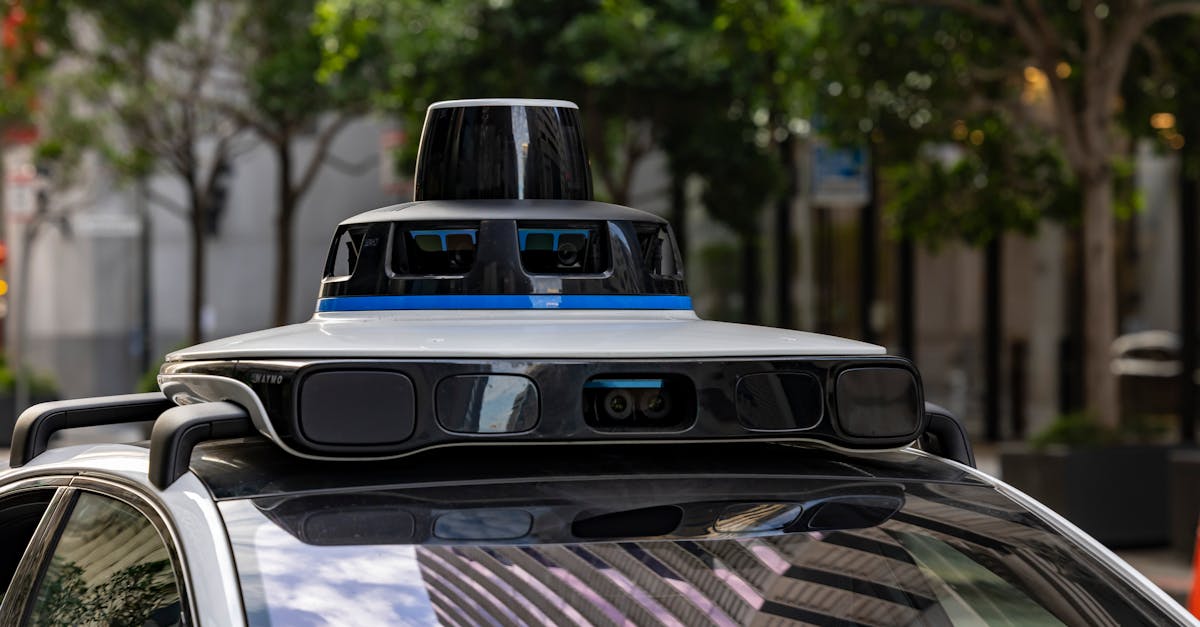
Picture a quiet Saturday morning on Brickell Avenue: the sun glints off the high-rise glass, a Waymo driverless minivan glides through traffic, and a traffic camera flashes red as the vehicle breezes past a stop sign. Within seconds, a Miami police cruiser lights up behind it, the officer’s siren humming, and the autonomous minivan pulls over without a human hand on the wheel. On July 12, 2024, that scene became a live case study for the nation’s first driverless traffic stop.
When the officer approached, the vehicle displayed its familiar autonomous-mode banner, and a remote safety driver in a control center in Mountain View took over the steering wheel for the remainder of the encounter. The officer asked the vehicle to stop, the safety driver complied, and the interaction concluded without a ticket. While no citation was issued, the episode sparked a flurry of headlines asking a simple yet profound question: who is legally responsible when a police officer halts a car that has no driver?
Waymo’s 2023 safety report boasted more than 20 million miles of driverless travel on public roads, zero fatalities, and only two minor collisions - both costing less than $50,000 in property damage. The Miami stop introduced a fresh variable: a police-initiated traffic stop that could open a liability door for the operator, the manufacturer, or the software provider. The incident also forced regulators to confront a scenario that, until now, existed only in academic papers.
Key Takeaways
- The Miami stop was routine, but it exposed gaps in existing traffic-stop statutes for AVs.
- Waymo’s safety record is strong, yet liability questions persist when police intervene.
- Regulators are scrambling to clarify responsibility for autonomous fleet encounters with law enforcement.
As we move from the street-level drama to the legal battlefield, the next sections explore why liability has become the new frontier for autonomous fleets.
Why Liability Is the New Frontier for Autonomous Fleets
Liability has shifted from the driver’s seat to the back-office of fleet managers, OEMs, and software vendors. A 2022 NHTSA analysis showed that 68% of crashes involving Level 3+ systems raised the question of who should bear fault, compared with 42% for traditional vehicles. That gap widens as fleets graduate from pilot projects to full-scale commercial services, where a single incident can eclipse the cost of an average insurance claim.
Take the 2021 Uber autonomous test in Arizona: a collision with a motorcycle led to a $3.2 million settlement that was split among Uber, the autonomous-system developer, and the insurer. The payout illustrated how liability can cascade across parties, turning a single mishap into a multi-million-dollar headache. For Waymo, a comparable scenario could see its $5 billion market cap leveraged to cover damages, while insurers demand higher premiums to hedge the uncertainty.
Insurance data adds another layer. The Insurance Information Institute reported that commercial auto insurance loss ratios for fleets employing autonomous technology averaged 0.93 in 2023, versus 1.12 for conventional fleets. The lower ratio reflects fewer crashes, yet the high-severity tail risk - especially legal exposure from police stops - remains a pricing challenge. In other words, fewer accidents do not automatically translate into lower overall risk when the rare but costly event of a law-enforcement encounter surfaces.
These numbers set the stage for the legal complexities that follow, prompting operators to ask: how do we protect our balance sheets when the law itself is still catching up?
Current Legal Landscape: Traffic Stops, State Laws, and Federal Guidance
Traffic-stop statutes across the United States were written with a human driver in mind. In California, Vehicle Code §22500 requires the driver to “stop the vehicle” when ordered by a police officer, a phrase that assumes a person is behind the wheel. Florida’s statutes echo the same language, leaving a gray area for autonomous operators who must interpret a command without a human driver to comply.
At the federal level, NHTSA’s 2023 "Automated Driving Systems: A Policy Framework" recommends that manufacturers embed a “law-enforcement interaction module” that logs officer commands, vehicle responses, and driver-override events. The guidance is advisory, not mandatory, and compliance is measured by voluntary audits - meaning many fleets are still deciding whether to invest in the extra telemetry.
Recent court rulings provide a glimpse of how judges are wrestling with these ambiguities. In the 2022 Pennsylvania case Commonwealth v. Lyft, the court held that the rideshare company could be liable for a traffic violation committed by its Level 4 vehicle because the company retained operational control. Conversely, a 2023 Texas decision exonerated a fully driverless taxi company when a police officer’s improper stop was deemed the proximate cause of the alleged violation.
"The patchwork of state statutes creates a legal minefield for autonomous operators," says legal analyst Maya Singh of the Center for Automotive Law.
These divergent rulings underscore why Waymo’s Miami stop is now a litmus test for how jurisdictions will interpret existing traffic-stop language in the age of driverless cars. The next wave of regulatory action aims to turn that minefield into a clearer road.
Regulatory Responses: From Miami’s Immediate Action to Nationwide Policy Shifts
Miami’s Department of Transportation moved quickly. On July 14, 2024, the agency issued an advisory instructing all autonomous-vehicle operators in the city to submit detailed logs of any police encounters within 30 days. The memo also mandated a visible “AV” emblem on the vehicle’s rear to help officers identify driverless cars at a glance.
Within weeks, NHTSA released a draft amendment to its Federal Automated Vehicles Policy (FAVP), proposing a mandatory “Law-Enforcement Interaction Report” (LEIR) that every AV operator must file after a traffic stop. The draft suggests a 10-day reporting window and outlines data fields such as officer badge number, command timestamps, and vehicle response mode. While the proposal is still open for public comment, it signals a shift toward formalizing the paperwork that currently lives in the back-office.
States are not sitting idle either. Arizona’s SB 1125 and Nevada’s AB 678 would codify a requirement for a “remote driver” to be reachable within 15 seconds of a police request, essentially turning the safety driver into a legal safety net. Meanwhile, the DOT’s Autonomous Vehicle Safety Initiative announced a $12 million grant program to fund pilot projects that integrate law-enforcement communication protocols into AV software stacks.
Collectively, these actions move the conversation from reactive enforcement to proactive policy design, giving both police officers and autonomous fleet operators clearer expectations. As the regulatory tide rises, the industry is scrambling to keep pace.
Implications for Fleet Operators, Manufacturers, and Insurers
For fleet operators like Waymo, the Miami incident forces a reassessment of risk-management frameworks. Companies are now drafting “Police Encounter SOPs” that define when a remote safety driver must assume control, how to document the interaction, and how to preserve evidence for potential litigation. These SOPs often include a checklist that mirrors the LEIR fields proposed by NHTSA, ensuring that the data is ready at a moment’s notice.
Manufacturers must embed telemetry that captures officer commands in real time. Waymo’s 2023 software update introduced a “Law-Enforcement Mode” that logs audio, video, and vehicle control data to a secure cloud buffer, accessible to regulators within 48 hours of request. Other OEMs are racing to match that capability, recognizing that a robust data trail can be the difference between a smooth settlement and a courtroom showdown.
Insurers are revising underwriting models to include a “law-enforcement exposure factor.” A 2024 actuarial study from Marsh & McLennan showed that fleets with a documented LEIR process experienced a 22% reduction in claim severity for police-related incidents. Premiums for such compliant fleets dropped by an average of 7% compared with non-compliant peers, underscoring the financial upside of early adoption.
Contractually, operators are adding indemnity clauses that shift liability for officer-initiated stops to the manufacturer if the vehicle’s software fails to comply with the officer’s command. This creates a new negotiation point in OEM-fleet agreements and could reshape the balance of risk across the ecosystem. The ripple effect reaches investors, who now demand clear liability roadmaps before committing capital.
In short, the Miami stop has turned a routine police interaction into a strategic planning session for every stakeholder in the autonomous-vehicle value chain.
Future Outlook: Toward a Unified Liability Framework for Autonomous Vehicles
Industry experts agree that the Miami stop will accelerate the push for a standardized liability regime. The Autonomous Vehicle Liability Working Group, convened by NHTSA, aims to release a unified “Liability Attribution Model” by late 2025. The model proposes three tiers of responsibility: (1) operator negligence, (2) manufacturer defect, and (3) law-enforcement error. By layering these tiers, the framework hopes to assign fault more predictably, reducing the “who-is-at-fault” debates that currently dominate headlines.
Legislators are also co-authoring the Federal Autonomous Vehicle Liability Act, which would establish a federal “safe harbor” for operators that can prove compliance with a nationally recognized LEIR protocol. A Brookings Institution analysis from 2023 estimated that such a safe harbor could shave up to $150 million off annual litigation costs for the top five AV fleets, freeing capital for further innovation.
Technology providers are racing to certify “Law-Enforcement Interaction Modules” through third-party labs, akin to ISO 26262 safety certifications. Early adopters anticipate a market advantage, as municipalities may prioritize fleets that demonstrate proven compliance during police encounters. In practice, a certified module could become a prerequisite for winning city contracts, much like emissions standards did for traditional taxis a decade ago.
All signs point to a convergence of law, policy, and technology that will finally give autonomous vehicles a clear legal footing on public roads. The Waymo Miami stop, once a headline-grabbing oddity, is shaping up to be the catalyst that aligns standards across the United States, paving the way for broader public-trust and commercial rollout of autonomous mobility.
What legal precedent does the Waymo Miami stop set?
The stop highlights that existing traffic-stop statutes, which reference a human driver, may be interpreted to hold the autonomous-vehicle operator or manufacturer liable if the vehicle fails to obey police commands.
How are insurers adjusting premiums for autonomous fleets?
Insurers are offering discounts - typically 5-7% - to fleets that adopt documented Law-Enforcement Interaction Reports and embed real-time telemetry, as these measures reduce claim severity for police-related incidents.
What does the NHTSA draft amendment require?
The draft amendment to the Federal Automated Vehicles Policy proposes a mandatory Law-Enforcement Interaction Report filed within 10 days of any traffic stop, detailing officer commands, vehicle response, and data logs.
Will a federal liability framework protect autonomous operators?
A proposed Federal Autonomous Vehicle Liability Act would create a safe harbor for operators that follow a nationally recognized LEIR protocol, potentially shielding them from lawsuits arising from lawful police stops.
How are manufacturers like Waymo responding technically?
Waymo added a Law-Enforcement Mode to its software stack, which automatically records audio, video, and control data during police interactions and flags the event for rapid compliance review.


