What the Waymo Miami Pull‑Over Reveals About State AV Laws
— 8 min read
Legal Disclaimer: This content is for informational purposes only and does not constitute legal advice. Consult a qualified attorney for legal matters.
Hook: The Miami Pull-Over That Stunned the Industry
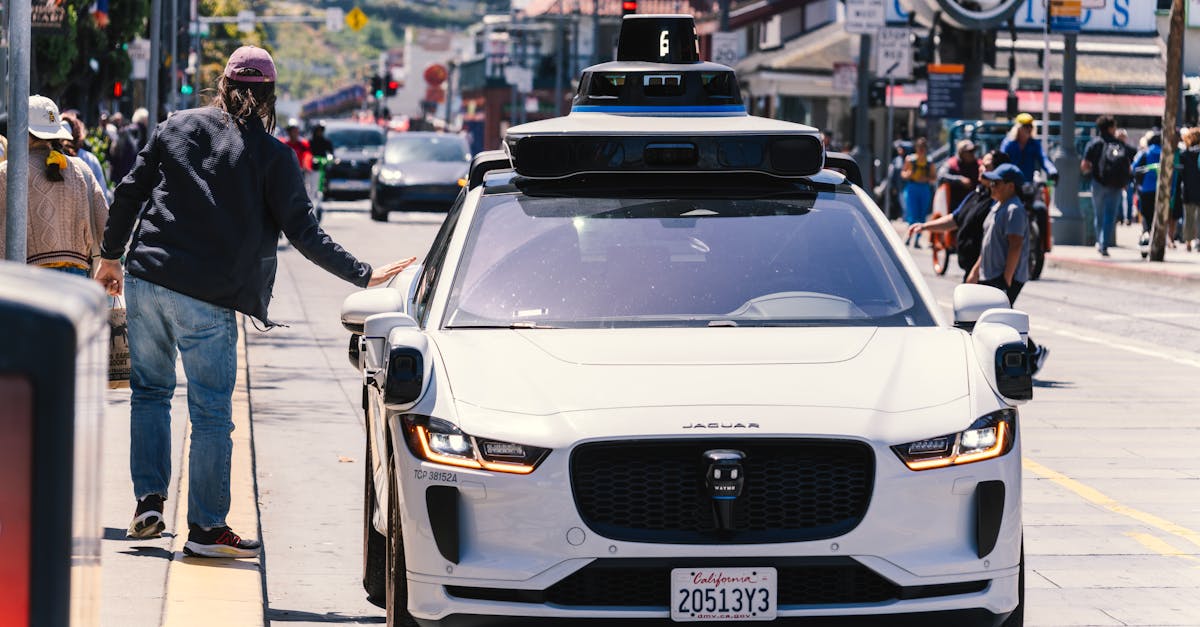
Picture this: a sun-splashed Miami boulevard on April 23, 2024, palm trees swaying, tourists snapping selfies, and a sleek, driver-less robotaxi gliding silently down Collins Avenue. The car’s cabin is empty, the dashboard glows with a calm, algorithmic confidence, and suddenly a flashing police cruiser rolls up. Lights flash, a siren wails, and the robotaxi obediently rolls to a stop - no human hand on the wheel, just a whisper of code. The scene looked ripped from a sci-fi movie, yet it unfolded in real life, and the internet exploded. Within minutes, headlines were asking the same three questions: Who decides a driverless car’s next move? Does a state’s permissive law trump a cop’s on-the-ground instincts? And what does this mean for the future of autonomous-vehicle testing across America? The Miami pull-over turned a routine traffic check into a legal flashpoint, exposing a hidden tension between Florida’s hands-off AV framework and the reality of street-level law-enforcement.
Waymo’s Miami Stop: What Really Happened on the Road
Waymo’s robotaxi was on a scheduled safety-inspection run, dutifully logging miles and sensor data, when an officer from the Miami Police Department signaled the vehicle to pull over. The officer described the car as a “suspicious vehicle” because it lacked a visible driver - a red flag in a department policy that treats any driver-less automobile as potentially unsafe. When the car’s onboard system received the stop command, it complied with textbook precision. The officer then demanded a manual override, insisting that a human be present to take control. Waymo’s safety driver, stationed thousands of miles away in a remote operations center, scrambled to intervene via the vehicle’s tele-operation console. Florida law, however, does not require a human to be physically inside the car during a traffic stop, so the remote driver could only send digital commands, not physically open the door. The standoff lasted roughly eight minutes. During that time, the officer escorted the robotaxi to a nearby parking lot, photographed the license plate, and collected paperwork. Waymo filed a formal protest, arguing that the pull-over violated Senate Bill 1100’s intent to let driverless cars operate hands-free as long as the operator maintains real-time monitoring. The incident was entered into the Florida Department of Highway Safety’s AV incident database, marking the first recorded stop of a driverless vehicle for a routine police check.
Key Takeaways
- Florida law allows driverless operation without an on-board safety driver.
- Local police can still issue a stop if they suspect a violation.
- Waymo’s remote safety driver was unable to physically intervene.
- The event triggered the first formal protest under Florida’s AV statutes.
After the car was released, both Waymo engineers and Miami officials issued statements that hinted at a larger conversation about how law-enforcement protocols need to evolve alongside autonomous tech.
Florida Autonomous Vehicle Law: The Permissive Playbook
Florida earned the nickname “the sunbelt sandbox” for a reason. In June 2022, the state passed Senate Bill 1100, a piece of legislation that dramatically lowered the barrier to entry for AV testing. The bill lets companies operate driverless vehicles on public roads after filing a safety-case report and posting a $5 million insurance bond - no on-board safety driver required. As of September 2023, the Florida Department of Highway Safety and Motor Vehicles (FLHSMV) listed 119 active AV testing permits, ranging from scrappy startups to industry behemoths like Waymo and Cruise. Every quarter, permit holders must upload a safety-report that details miles driven, disengagements, and any incidents involving law-enforcement interaction. This data lands on a public portal, creating a transparent stream that journalists, researchers, and curious citizens can scroll through. What the law doesn’t spell out is a clear protocol for police stops. The statute leaves that to departmental policy, which varies from city to city. Critics argue that the lack of a “law-enforcement override” clause creates a gray zone that can lead to exactly the kind of showdown we saw in Miami. Supporters, however, point to the state’s meteoric growth: Florida logged over 3.5 million autonomous miles in 2023, a 28 percent jump from the prior year, and attracted more than $1 billion in private investment for AV testing hubs in Miami, Orlando, and Tampa.
"Florida’s AV testing mileage grew by 28 percent in 2023, topping 3.5 million miles," the Florida Highway Safety Office reported.
That rapid expansion is both a badge of honor and a warning sign - speedy growth without a uniform police playbook can lead to friction on the street level.
California’s Caution: The Regulatory Playbook
On the opposite coast, California has taken a more measured approach. Its autonomous-vehicle framework, embedded in the California Vehicle Code §§ 4500-4599, has been evolving since 2012. To test on public roads, a company must secure three separate permits: a testing permit, a disengagement-reporting permit, and an emissions permit for non-electric prototypes. In 2023, the California Department of Motor Vehicles listed 65 active autonomous-testing permits. The state imposes a rigorous disengagement-reporting regime: every instance where a human driver must take control must be logged, and Level 4 systems are expected to stay under 0.5 disengagements per 1,000 miles. Waymo’s 2023 safety report boasted 0.2 disengagements per 1,000 miles - well below the threshold and a testament to its technical maturity. California also mandates a “law-enforcement liaison” agreement. Police departments receive a standardized protocol that outlines how to interact with driverless vehicles, including a handheld “override” device that can send a remote signal to the vehicle’s control system. This pre-emptive coordination has paid off: the California Highway Patrol recorded only 12 driverless-vehicle stops in 2023, compared with 57 nationwide. The trade-off is higher compliance costs - average testing fees exceed $150,000 per year - and a more layered paperwork process. Yet many industry insiders argue that the predictability and reduced friction on the streets make the expense worthwhile.
Regulatory Rumble: Why the Pull-Over Became a Legal Flashpoint
The Miami halt erupted because three rulebooks were speaking different languages. Florida’s statute hands Waymo the right to operate driverless, but it stays silent on police authority during a stop. Miami-area law-enforcement agencies, following a department policy that treats any vehicle without a visible driver as “suspicious,” acted under standard traffic-law provisions. Waymo’s compliance checklist, built around the state’s quarterly safety-report requirements, assumes a remote safety driver can intervene electronically, not physically. When the officer demanded a manual override, the company was caught between its own safety protocol - which requires the vehicle to stay in autonomous mode unless a disengagement is logged - and the officer’s insistence on a human-in-the-loop. The resulting mismatch created a legal flashpoint: police cited a traffic-law violation, while Waymo pointed to statutory compliance. The protest filed with the Florida Department of Highway Safety argued that the officer’s action contravened the spirit of Senate Bill 1100, which was designed to foster a hands-free testing environment. The department’s response, pending as of May 2024, will likely set a precedent for how future stops are handled across the Sunshine State.
Beyond the immediate dispute, the case has prompted lawmakers in Tallahassee and Miami-Dade County to draft amendment proposals that would explicitly define police interaction protocols for driverless cars.
Future-Proofing the Free-Wheeling State: Toward a Florida-California Consensus
Industry leaders are already sketching a hybrid model that blends Florida’s agility with California’s procedural rigor. The first step would be a joint “interstate AV forum,” a standing committee where regulators from both states share safety-case templates, incident-reporting formats, and law-enforcement liaison guidelines. Such a forum could produce a standardized protocol for police stops: a brief, digital “AV-status” check that confirms the vehicle’s compliance with its permit, followed by a clear chain-of-command for remote override. By adopting California’s liaison language, Florida could retain its low-entry barrier while giving police a playbook that reduces ambiguity. Data sharing would be another pillar. Florida’s public safety-report portal already publishes mileage and disengagement figures. Merging this with California’s granular disengagement logs would create a national dataset of over 6 million autonomous miles, enabling cross-state benchmarking and faster safety improvements. Stakeholders estimate that a unified framework could shave up to 15 percent off compliance costs for companies operating in both states, while preserving the rapid-deployment ethos that Florida champions. The hope is that a consistent, coast-to-coast playbook will prevent another Miami-style standoff.
Potential Federal Role: Bridging State Silos with National Guidance
The U.S. Department of Transportation (DOT) and the National Highway Traffic Safety Administration (NHTSA) have long advocated for baseline performance thresholds that apply nationwide. In 2023, NHTSA released a set of “AV Safety Metrics,” which include a maximum disengagement rate of 0.3 per 1,000 miles for Level 4 systems and mandatory crash-avoidance testing on standardized scenarios. If these metrics become a federal baseline, states could keep their own permitting quirks while speaking a common safety language. Florida could preserve its streamlined permit-application form, but it would need to certify that each applicant meets the NHTSA disengagement ceiling. California could retain its multi-permit structure, but it would no longer need to reinvent disengagement reporting standards. Federal guidance could also mandate a “Law-Enforcement Interaction Protocol” that all states must adopt, dramatically reducing the likelihood of incidents like the Miami pull-over. Funding incentives - such as the $200 million AV Innovation Grant announced in FY 2024 - could be tied to compliance with these national standards, nudging states to align quickly. In short, a federal safety backbone would let states experiment within defined guardrails, turning today’s regulatory rivalry into a collaborative sandbox.
Roadmap & Timeline: From Sunbelt to West Coast
A realistic three-phase plan can transform the current rivalry into a collaborative ecosystem by 2029.
Phase 1 (2024-2025): Pilot Alignment Both states convene a working group to draft a unified incident-reporting schema and a shared law-enforcement liaison handbook. Pilot programs in Miami and San Francisco would test the new protocol on 10,000 autonomous miles each, collecting real-world feedback from officers, operators, and passengers.
Phase 2 (2026-2027): Joint Compliance Audits Teams from the Florida Department of Highway Safety and the California DMV conduct bi-annual audits of AV operators, verifying that disengagement data, safety-case reports, and insurance bonds meet the federal baseline. Successful auditors earn a “Dual-State Certified” badge, recognized across the country and used as a marketing differentiator.
Phase 3 (2028-2029): Interstate AV Certification NHTSA issues an “Interstate AV Certification” that allows a vehicle cleared in either state to operate in the other without additional permits. By the end of 2029, the certification could cover up to 30 percent of all driverless miles logged in the United States, unlocking smoother cross-state rides for passengers and freight alike.
When the dust settles, the U.S. will have a patchwork-free, coast-to-coast framework that respects local nuance but eliminates the surprise-stop scenario that turned a sunny Miami street into a courtroom drama.
FAQ
What law allowed Waymo to operate driverless in Florida?
Senate Bill 1100, passed in June 2022, permits autonomous-vehicle testing without an on-board safety driver as long as the operator files a safety-case report and posts a $5 million insurance bond.
How many autonomous-vehicle permits does Florida have?
As of September 2023, Florida’s Department of Highway Safety listed 119 active autonomous-vehicle testing permits.
What is the disengagement rate for Waymo in 2023?
Waymo reported 0.2 disengagements per 1,000 autonomous miles in its 2023 safety report, well below California’s threshold of 0.5 per 1,000 miles.
Can a police officer stop a driverless car in Florida?
Yes, under standard traffic-law provisions an officer can stop any vehicle they deem suspicious, but Florida law does not currently prescribe a specific protocol for interacting with driverless vehicles.
What federal guidance could unify state AV rules?
NHTSA’s 2023 AV Safety Metrics, which set a maximum disengagement rate of 0.3 per 1,000 miles and require standardized crash-avoidance testing, could serve as a baseline that all states adopt while retaining their own permitting nuances.


