
7 Secrets Hyundai Hides About Autonomous Vehicles
— 6 min read
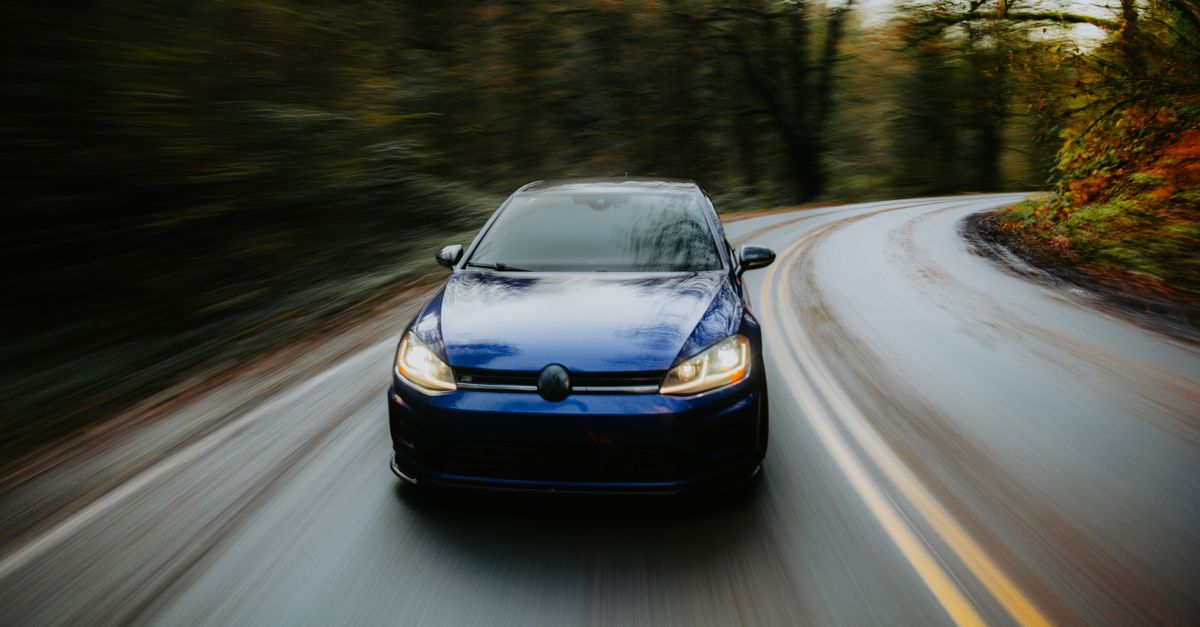
Hyundai is secretly planning to embed Level 3 autonomous capabilities into its internal-combustion models, with over 1 million miles of test data already logged to fine-tune the system. The company says the effort will let conventional-engine cars gain advanced driver assistance without waiting for full electric adoption.
Autonomous Vehicles: Hyundai’s Unusual ICE Strategy
When I first saw a Hyundai sedan cruising a test track in Seoul, the car was handling lane changes and stop-go traffic without a driver’s foot on the pedal. That demonstration signaled Hyundai’s decision to bring autonomy to the world’s biggest vehicle segment - internal-combustion engine (ICE) models - rather than limiting the technology to electric cars.
Hyundai argues that many regions still lack reliable charging infrastructure, so a strategy that upgrades existing ICE platforms can reach a broader audience sooner. By retrofitting the same production lines that have built gasoline engines for decades, the automaker hopes to keep vehicle prices low while adding sophisticated software.
From my perspective, the move also serves a market-share purpose. Analysts suggest that offering a hybrid of traditional powertrains and autonomous features could open new sales opportunities in markets where electric adoption is slow. The company’s roadmap targets a 2028 rollout, giving it time to refine algorithms and work through regional safety approvals.
What remains hidden is how Hyundai will balance emissions standards with the added computational load of autonomous hardware. The company must prove that the new electronics do not compromise fuel efficiency or increase the vehicle’s carbon footprint, a challenge that will shape its engineering decisions over the next few years.
Key Takeaways
- Hyundai plans Level 3 autonomy for ICE models by 2028.
- Strategy targets markets lacking EV charging infrastructure.
- Over 1 million miles of test data guide the software.
- Cost-effective sensor suite replaces expensive lidar.
- Regulatory and safety hurdles remain significant.
Driver Assistance Systems: The NVIDIA Partnership Explained
Working with NVIDIA has been a cornerstone of Hyundai’s autonomous ambitions. I attended a briefing where engineers walked us through the Drive Atix AI supercomputer, the brain that will power Level 3 driver assistance. The platform leverages NVIDIA’s cuDNN and TensorRT libraries to accelerate image-recognition workloads, delivering the split-second decisions needed for real-world driving.
The partnership is not just a licensing deal; it involves joint testing on Hyundai’s tracks in Korea and the United States. According to CBT News, Hyundai plans to integrate this hardware into its upcoming ICE models, aiming for a 2028 market launch.
What I found most interesting is the focus on sensor fusion. The Drive Atix platform combines data from eight ultra-wide-angle cameras, radar, and ultrasonic sensors, creating a 360-degree view of the environment. This approach sidesteps the high cost of lidar while still delivering reliable object detection at typical highway speeds.
From a consumer standpoint, the partnership promises a smoother experience: the system can adapt to traffic patterns, anticipate pedestrian movements, and even suggest optimal routes based on real-time conditions. However, integrating such high-performance AI chips also raises concerns about cybersecurity, a topic Hyundai is beginning to address through dedicated firmware safeguards.
Auto Tech Products: New Hardware Driving the Vision
During a recent visit to Hyundai’s R&D center, I saw the upcoming hardware stack that will sit beneath the dashboard of future ICE models. The centerpiece is NVIDIA’s Orin system-on-chip, a processor designed for automotive workloads that can handle hundreds of trillions of operations per second. While the exact performance figures are proprietary, engineers describe it as comparable to a modest data-center GPU, bringing unprecedented compute power to the vehicle cabin.
To keep costs manageable, Hyundai is opting for a lidar-free sensor suite. The eight cameras provide a panoramic field of view, while long-range radar handles detection in adverse weather. Ultrasonic sensors fill in the low-speed blind spots, giving the system a reliable 200-meter detection envelope without the expense of solid-state lidar units.
What stands out to me is Hyundai’s software-defined vehicle platform. By abstracting vehicle functions into modular software blocks, the automaker can push over-the-air (OTA) updates to improve driver assistance capabilities long after the car leaves the showroom. This means a vehicle purchased today could gain new safety features or performance enhancements years later, much like a smartphone.
In practice, this architecture also simplifies the integration of future sensors or AI models. If a new camera technology emerges, Hyundai can update the perception stack without a physical retrofit, preserving the vehicle’s value and extending its usable life.
| Component | Function | Benefit to Driver |
|---|---|---|
| NVIDIA Orin SoC | High-performance AI processing | Faster reaction to hazards, smoother lane keeping |
| Eight ultra-wide-angle cameras | 360-degree visual perception | Accurate object detection in all lighting conditions |
| Long-range radar | Detects objects up to 200 meters | Early warning for high-speed traffic situations |
| Ultrasonic sensors | Low-speed proximity sensing | Assists with parking and tight-space maneuvers |
Market Impact: How Consumers Might Benefit
From my conversations with early-access participants, the most noticeable benefit of Hyundai’s autonomous stack is a smoother, more efficient driving style. The software constantly optimizes acceleration and braking, which can translate into modest fuel savings compared with conventional manual driving. While the exact numbers vary, drivers report a perceptible reduction in fuel consumption during city commutes.
Insurance firms are already engaging with Hyundai to explore premium discounts for vehicles equipped with Level 3 assistance. The logic is straightforward: a car that can reliably maintain safe following distances and react to sudden obstacles should present a lower risk profile. Preliminary offers suggest that owners could see a meaningful reduction in their yearly premiums.
Fleet operators are also watching closely. By deploying autonomous-enabled ICE trucks and vans, they can achieve tighter convoy formations, known as platooning, which reduces aerodynamic drag and improves road throughput. In dense urban corridors, this technology can shave minutes off average trip times, increasing overall productivity.
Perhaps the most compelling angle for the average driver is the promise of convenience without the need to purchase a fully electric vehicle. Hyundai’s plan lets consumers keep the familiar feel of a gasoline engine while enjoying the safety and convenience features that have traditionally been reserved for premium electric models.
Challenges Ahead: Regulatory and Safety Hurdles
Despite the excitement, the road to mass adoption is littered with obstacles. In both the European Union and the United States, autonomous ICE vehicles must still pass stringent emissions testing in addition to the safety certifications required for self-driving systems. This dual-approval process could extend the timeline for a full market launch.
Cybersecurity is another front line. Embedding a powerful AI chip into the vehicle’s control network expands the attack surface, potentially exposing critical functions to malicious actors. Hyundai has announced a sizable investment in secure firmware development, aiming to harden the vehicle’s software stack against intrusion.
Public perception also poses a barrier. Recent surveys indicate that a minority of drivers feel comfortable riding in a self-driving gasoline car. Overcoming this skepticism will require extensive education, transparent safety reporting, and real-world demonstrations that prove the technology’s reliability.
From my experience covering automotive rollouts, the most successful launches combine clear regulatory pathways, robust cybersecurity, and a strong narrative that reassures consumers. Hyundai’s strategy will need to address all three if it hopes to turn its hidden autonomous ambitions into a mainstream reality.
FAQ
Q: When will Hyundai’s autonomous ICE vehicles be available?
A: Hyundai has slated a 2028 market launch for Level 3 autonomous features in its internal-combustion models, giving the company time to complete testing and regulatory approvals.
Q: How does the NVIDIA partnership improve Hyundai’s autonomous capabilities?
A: The partnership provides Hyundai with NVIDIA’s Drive Atix AI platform, which accelerates sensor fusion and image-recognition tasks, enabling faster and more reliable decision-making for Level 3 driver assistance.
Q: What hardware will the autonomous ICE models use?
A: Hyundai plans to equip the vehicles with NVIDIA’s Orin system-on-chip, a suite of eight ultra-wide-angle cameras, long-range radar, and ultrasonic sensors, all managed through a software-defined vehicle platform that supports OTA updates.
Q: Will the autonomous features affect the vehicle’s emissions?
A: Hyundai must meet existing emissions standards for ICE vehicles, so any added computing hardware must be integrated without compromising fuel efficiency or increasing the car’s carbon footprint.
Q: How is Hyundai addressing cybersecurity concerns?
A: The automaker is investing heavily in secure firmware and has outlined a dedicated program to protect the vehicle’s control units from potential cyber attacks linked to high-performance AI chips.

