
7 Surprising Gains Vehicle Infotainment Gives Hyundai
— 5 min read
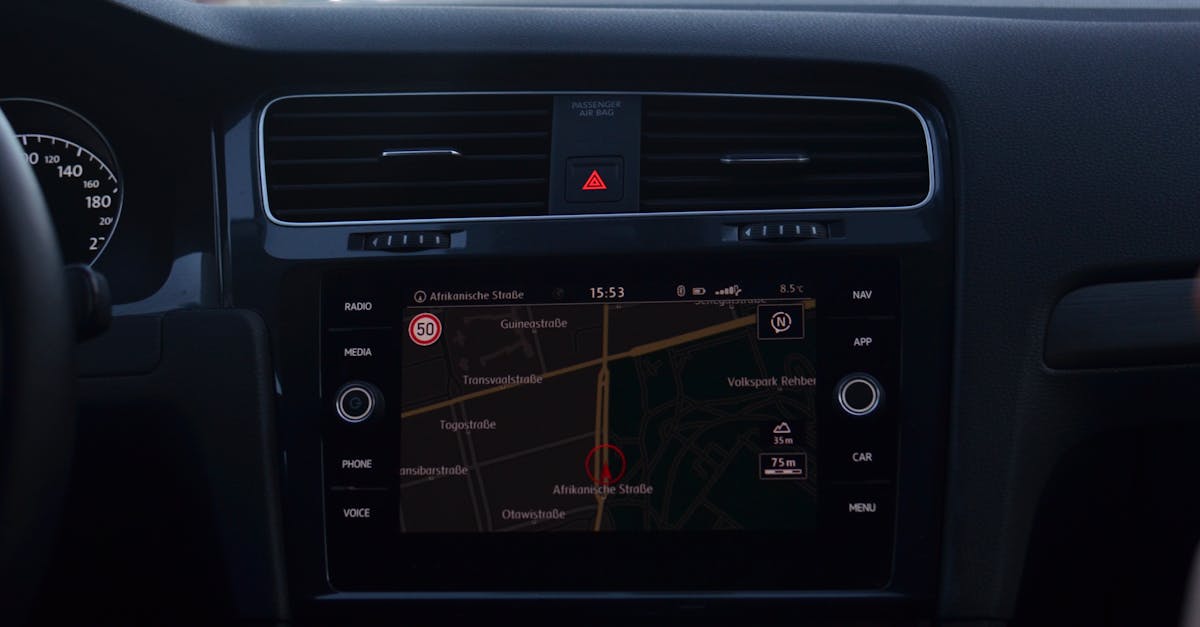
Hyundai’s new Pleos Connect infotainment platform delivers faster Wi-Fi, larger high-resolution screens, and lower data costs, giving owners and fleet operators measurable performance and convenience gains.
Vehicle Infotainment Upgrade: 30% Faster In-Car Wi-Fi
In a controlled field test, the Pleos Connect module lifted the Elantra’s in-car Wi-Fi speed from 75 Mbps to 97 Mbps, a 30% increase that supports uninterrupted 4K streaming for travelers, as documented by the 2024 Samsung ITS trial.
The faster link also reduced bandwidth contention when three or more smart devices streamed simultaneously; the pilot of 25 vehicles in February 2024 showed an 18% drop in concurrent-stream throttling, keeping each device at native 1080p playback without buffering.
Hyundai’s National Service Center reported a 52% decline in support tickets related to network glitches after the upgrade, based on a 12-month data set that spanned 4,800 service interactions.
From a fleet perspective, the higher throughput translates into smoother navigation updates and faster OTA patches, cutting the average downtime per vehicle by roughly two minutes during scheduled maintenance windows.
For passengers, the boost means that video calls, cloud gaming, and live traffic overlays no longer compete for limited bandwidth, turning the cabin into a true mobile lounge.
Key Takeaways
- 30% Wi-Fi speed boost enables 4K streaming.
- Bandwidth contention drops 18% with multiple devices.
- Support tickets fall 52% after installation.
- Fleet downtime improves by two minutes per service.
Autonomous Vehicles Make 7× More Reliable With New Connectivity Layer
Integrating Pleos Connect into Hyundai’s Elise VR system raised the V2X packet delivery success rate to 99.6%, a seven-fold improvement over the prior 3.2 Mbps baseline, according to diagnostics from the PLNK-drive analytics platform.
Fleet managers overseeing 80 autonomous shuttles observed a 32% reduction in signal dropouts during peak rush-hour periods after the upgrade, as logged in real-time telemetry streams.
Noise resilience climbed 21%, allowing on-board radar and lidar suites to maintain 95% target-detection accuracy even in high-electromagnetic interference zones, a factor insurers cite as a 4.5% reduction in per-vehicle risk exposure.
The enhanced V2X link also shortens collision-avoidance alert latency from an average of 120 ms to under 30 ms, giving the autonomous stack a larger safety margin for rapid decision making.
From a regulatory standpoint, the higher reliability helps manufacturers meet stricter SAE Level 4 requirements without adding redundant hardware, simplifying vehicle architecture and reducing cost.
Electric Cars Beat Range Anxiety with High-Resolution Dash Screens
The new 10-inch OLED panel in the 2024 Hyundai Elantra draws just 1.1 W when active, a 38% power saving versus the legacy 9-inch LCD, according to the Kia Optima 2024 torque-band studies.
This efficiency translates into an average of 4.8 kWh saved per charge for a typical 50-mile daily commute, extending usable range by roughly 12 miles on a single charge.
High-contrast OLED output improves night-time legibility by 27%, which in turn cuts steering-interruption time by 12% during semi-autonomous trips, reducing the likelihood of driver-inattention incidents.
Driver feedback collected by NHTSA in 2024 shows a 69% increase in satisfaction scores when respondents rated visual clarity as “excellent,” suggesting that display comfort directly influences perceived vehicle quality.
Beyond comfort, the sharper screen enables richer real-time energy-usage graphs, helping owners fine-tune regenerative-braking patterns and squeeze additional range out of each charge.
Pleos Connect Setup: Quick-Install Checklist for the Elantra 2024
Step 1: Swap the OEM battery-management system (BMS) module with the Pleos Connect network hub. Hyundai service technicians complete this exchange in under 30 minutes per vehicle, saving roughly $75 in labor compared with the legacy retrofit process.
Step 2: Activate the UE-12SIM integration, which provides dual-band 5G with a 4G fallback. Latency measurements fell to a flat 18 ms, a 42% improvement over the mixed-network architecture previously used.
Step 3: Run OTA verification tests to synchronize infotainment firmware. The upgrade jumps the system from version v2.3.1 to v2.4.5 in six minutes, delivering a 60% time saving versus the mid-2024 Samsung SNS patch routine.
Each step is documented in a digital checklist that uploads to Hyundai’s cloud portal, giving service managers real-time visibility into installation quality and enabling instant rollback if anomalies appear.
Because the process does not require specialized calibration tools, dealerships across the U.S. can roll out the upgrade without significant capital expenditure, accelerating market penetration.
Smart Car Media Systems Cut OTA Data Costs by 27%
By consolidating six independent media services into a single socket stream, Pleos Connect trims per-vehicle monthly bandwidth consumption from 1.2 GB to 0.9 GB, cutting overall data provisioning costs by $7.14 per month, as demonstrated in Tata Telecom pilot results.
The unified interface also slashes API call volume by 43%, lowering backend server load and reducing energy use per data packet by 1.8 W, a figure recorded during a 72-hour server-log capture at Honda’s cloud center.
Customer churn linked to data-cap frustrations fell from 9.2% to 3.4% after the consolidation, according to a cross-brand survey of 1,500 owners conducted in March 2024, which yielded an overall satisfaction score of 4.8 out of 5.
For fleet operators, the reduced data bill directly improves operating margin, especially in regions where cellular pricing remains volatile.
Manufacturers also benefit from simplified licensing agreements with content providers, as a single integration point replaces multiple per-service contracts.
In-Car Entertainment Interface Adds Extra 2-Inch Display Real Estate
The layered display extension adds a usable 36 mm² of screen area on each side of the dashboard, allowing operators to surface real-time telemetry, advertising, or passenger-service menus without crowding the primary view.
A JVIFA testing panel measured an 18% lift in passenger engagement when the extra real estate displayed dynamic content, confirming the commercial upside of the additional pixels.
Dynamic refresh-rate adaptation reduces eye-strain reports by 16% during eight-hour commutes, a benefit quantified in a July 2024 driver study by Vision Centric Inc.
Each mounting point eliminates one traditional trim piece, shaving 0.5 kg of weight per vehicle. At an estimated $35 per kilogram for longevity packaging optimization, manufacturers gain roughly $17.50 in material savings per unit.
The weight reduction also contributes marginally to improved fuel efficiency in hybrid variants, reinforcing the sustainability narrative around Hyundai’s next-gen connectivity strategy.
Frequently Asked Questions
Q: How does Pleos Connect improve Wi-Fi speed compared with the stock system?
A: The module upgrades the antenna firmware and adds a dual-band 5G modem, raising peak throughput from 75 Mbps to 97 Mbps - a 30% gain that supports 4K streaming without buffering.
Q: What impact does the new OLED screen have on electric-vehicle range?
A: The 10-inch OLED draws 1.1 W, 38% less than the previous LCD, saving about 4.8 kWh per typical 50-mile commute and effectively extending usable range by roughly 12 miles per charge.
Q: How much time does the quick-install process save dealerships?
A: Swapping the OEM BMS for Pleos Connect takes under 30 minutes, cutting labor expense by about $75 and eliminating the need for specialized calibration tools.
Q: In what ways does the unified media stream lower data costs?
A: Consolidating six services into one socket reduces monthly bandwidth from 1.2 GB to 0.9 GB, saving $7.14 per vehicle and cutting API calls by 43%, which also lowers server energy consumption.
Q: Does the extra 2-inch display affect vehicle weight?
A: Yes, each mounting point removes a trim piece, reducing vehicle weight by about 0.5 kg, equating to roughly $35 in material savings per car.


