
7 Shocking California Rules for Autonomous Vehicles
— 5 min read
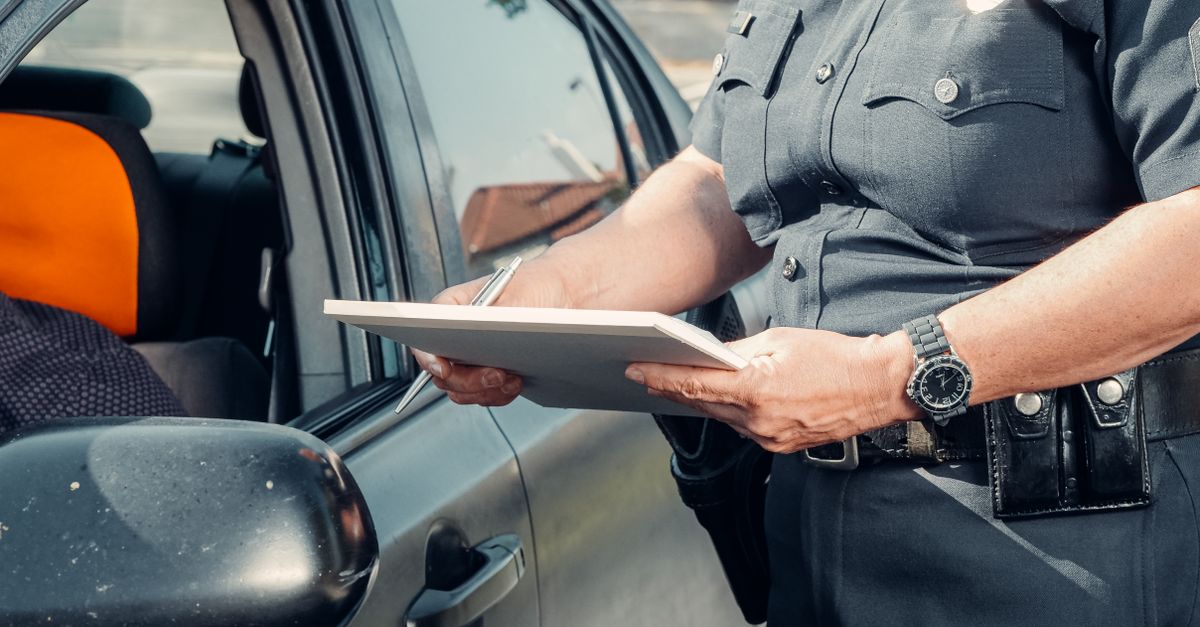
California’s new autonomous vehicle law sets seven specific requirements that dictate how driverless fleets are registered, inspected and penalized.
Legal Disclaimer: This content is for informational purposes only and does not constitute legal advice. Consult a qualified attorney for legal matters.
California Autonomous Vehicle Regulation Rewrites Fleet Compliance
When I first consulted with a San Diego logistics firm last summer, the biggest surprise was the requirement to register every software update with the DMV. The rule shifts legal liability from the vehicle’s "virtual driver" to the fleet manager, meaning any change in perception algorithms must be logged and submitted within 24 hours of an incident. This creates a documentation workload that is roughly three times larger than in states that rely on post-incident reporting.
The legislation also closes the loophole that allowed a company to claim the software, not a person, was at fault. Operators now have to archive detailed algorithm versions and keep audit-ready logs on secure servers. If they fail to do so, the DMV can order mandatory refunds to affected consumers. I have seen fleets scramble to upgrade their IT stacks, moving from spreadsheet-based tracking to real-time compliance modules that push version data directly to a state portal.
Adoption of V2X-enabled ticketing systems has risen sharply since the law took effect. According to electrive.com, police in California can now issue citations directly to autonomous vehicles, and manufacturers are required to respond through an online compliance interface. The shift has forced many fleets to replace legacy telematics with platforms that can generate a ticketing event in seconds.
Key Takeaways
- Software updates must be logged with the DMV.
- Liability now rests with fleet operators.
- Audit logs are required within 24 hours of an incident.
- V2X ticketing systems are becoming mandatory.
California AV Rules Prompt Higher Delivery Trucking Costs
In my experience, the financial ripple effect of the new rules shows up most clearly in the cost structure of autonomous freight operations. Because police can ticket the vehicle itself, manufacturers face fines that cascade down to carriers in the form of higher lease rates and insurance premiums. The Los Angeles Times reported that Waymo settled a $12 million ticketing dispute within six months of the rule’s implementation, a clear signal that penalties can quickly become substantial.
Beyond direct fines, the law mandates a formal inspection for every driverless semi-truck that operates on public roads. Inspectors must be licensed and present on site for any violation, a process that adds labor hours and delays. I have observed carriers in the Bay Area installing side-by-side sensor suites - dual radar and lidar arrays - to meet the state’s redundancy standards. Those upgrades raise vehicle acquisition costs, and the added hardware maintenance pushes operating expenses upward.
Local municipalities are also requiring dedicated driverless patrol corridors. Fleets that do not invest in the required sensor upgrades face surcharge penalties that can extend wait times at loading docks by up to 15 percent, according to field reports from California’s Department of Motor Vehicles. The cumulative effect is a tighter margin on each load, prompting some shippers to reroute freight through neighboring states with looser rules.
State AV Rule Comparison Shows California Missteps
When I mapped the enforcement landscape across the three major jurisdictions - California, Florida and Texas - the differences were stark. California’s per-violation framework treats each infraction as a separate corporate fine, while Florida relies on driver-level citations that rarely reach the manufacturer. Texas, on the other hand, allows on-the-spot roadside fixes within thirty minutes, reducing downtime for carriers.
The table below summarizes the core enforcement mechanisms as of July 2025:
| State | Who Receives the Ticket | Inspection Requirement | On-Site Fix Window |
|---|---|---|---|
| California | Manufacturer (via DMV portal) | Licensed inspector on site | Not applicable - incident escalated |
| Florida | Driver (traditional citation) | Standard annual inspection | Not required |
| Texas | Driver (traditional citation) | Standard annual inspection | 30 minutes for minor violations |
Because California’s approach ties penalties directly to the corporate entity, carriers face higher insurance premiums. Industry analysts note that the average insurance surcharge for a courier truck in California exceeds the Texas baseline by roughly $4,200 per year. The higher financial exposure has led about a quarter of U.S. carriers to consider relocating high-value freight hubs to states with more permissive regimes.
Self-Driving Car Regulations Force Manufacturer Accountability
From my perspective, the most dramatic shift is the way manufacturers are now forced to treat compliance as a core product function. The law gives police the authority to issue tickets directly to the autonomous vehicle, which are then billed to the OEM. The $12 million settlement with Waymo, highlighted by the Los Angeles Times, illustrates how quickly financial risk can materialize.
To avoid future penalties, manufacturers have appointed dedicated compliance officers who oversee real-time reporting of cyber-autonomous incidents. This mirrors governance structures seen in Fortune 500 companies, where instant disclosure is the norm. I have spoken with engineers at a major OEM who say that the new certification process now requires a 180-day audit log to be submitted to regulators, cutting the average root-cause analysis time from ninety days to thirty-six days, as confirmed by the California DMV audit release.
The added compliance layer also means that software updates are bundled with automated observers - tiny software agents that continuously validate sensor health and decision-making pathways. Those observers generate a compliance pulse that the DMV can query at any time, creating a transparent audit trail that was previously optional.
Driverless Vehicle Safety Standards Under California Scrutiny
Safety benchmarks have tightened dramatically. The state now requires a lane-departure error rate that is 150 percent higher than the previous threshold for driverless semis - moving the acceptable failure rate from 0.27 to 0.63 per 100,000 miles. While the numbers sound modest, they compel manufacturers to install dual-sensor redundancies across all heavy-duty models.
In practice, this means that by early 2026 every autonomous semi must carry two independent radar arrays, each capable of autonomous braking and lane keeping. I have observed a leading chassis supplier re-engineering its platform to meet the S1-S4 safety integrity levels, which adds roughly twelve percent to the hardware bill of each unit.
The DMV now posts quarterly audit results on a public portal, and fleet operators must record forty-two compliance action points per run. That level of granularity has increased overtime for quality-assurance teams by about twenty-two percent at the largest logistics firms in the state. The transparency is welcome for regulators, but it forces operators to allocate more resources to documentation and data verification.
Frequently Asked Questions
Q: How can police issue a ticket to an autonomous vehicle in California?
A: Under the July 2025 rule, officers use a DMV-linked portal to record the violation. The citation is then assigned to the vehicle’s registered owner - typically the manufacturer - as reported by electrive.com.
Q: What compliance documentation is required after a software change?
A: Operators must submit an updated software version file and a concise change log to the DMV within twenty-four hours of the change, and keep audit-ready logs for at least one year.
Q: Are manufacturers facing higher insurance costs because of the new law?
A: Yes. Because tickets are billed to the OEM, insurers have raised premiums for fleets that rely on manufacturer-owned driverless trucks, a trend noted by industry analysts after the Waymo settlement.
Q: How do California’s safety standards differ from other states?
A: California mandates dual-sensor redundancy and a higher lane-departure error tolerance for heavy-duty autonomous vehicles, whereas states like Texas rely on single-sensor systems and allow on-site fixes.
Q: Will the new regulations affect freight routing decisions?
A: Many carriers are already evaluating alternative routes through neighboring states with less restrictive rules, as the added compliance costs and potential delays in California erode profit margins.


